Lionel Bayol-Thémines
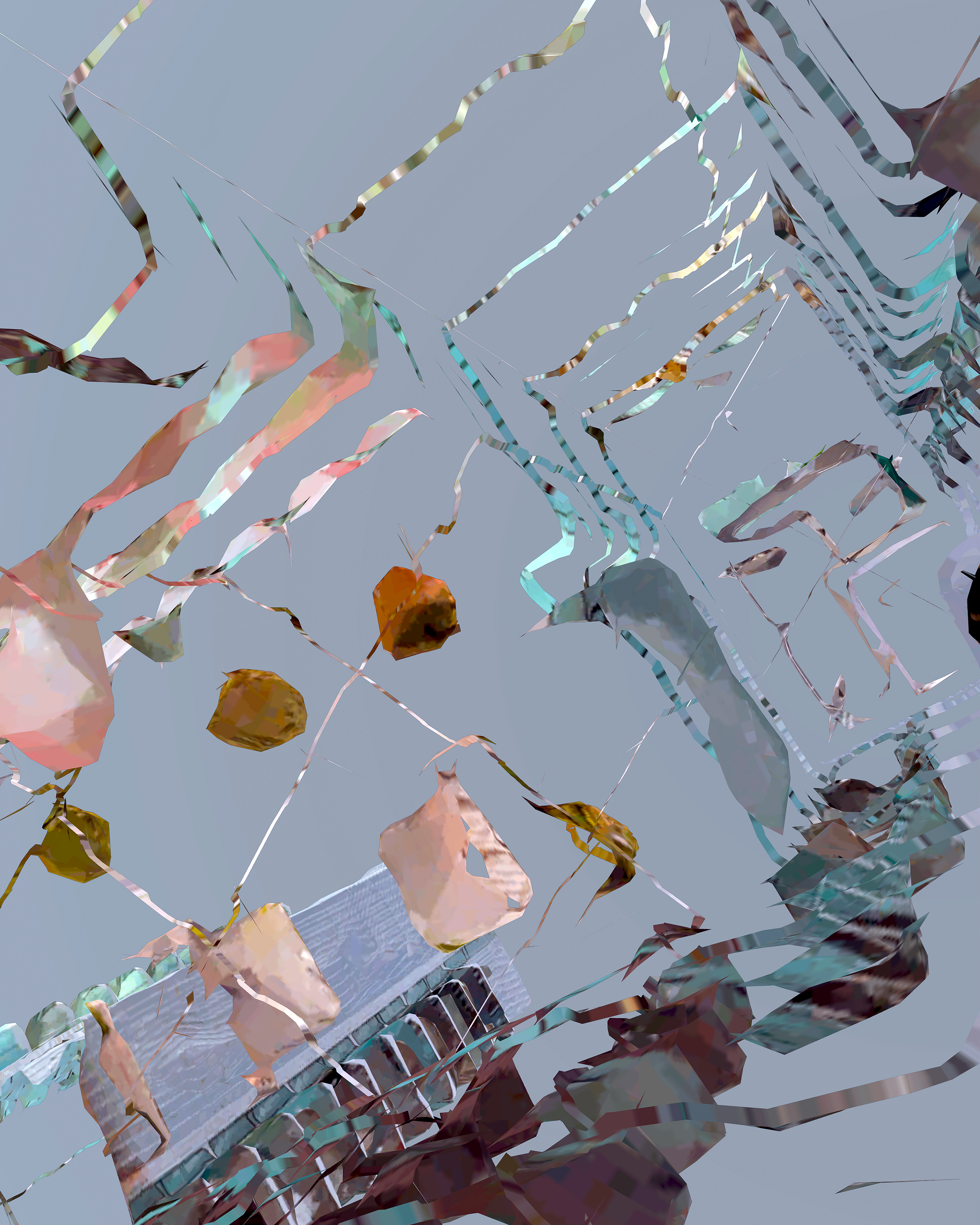
Lionel Bayol-Thémines (1968), a scientist by training, is a graduate of the ENSP-Arles (École Nationale Supérieure de la Photographie). He is a resident of the Fondation Nationale des Artistes and teaches photography at ESADHaR in Rouen. Inspired by the philosopher Vilém Flusser - who questioned the history of images and their process of creation - and by artists such as Joan Fontcuberta who work on the "truth" of photography and on its capacity to represent reality, Lionel Bayol-Thémines produces unique images that question the capacity of digital photography to generate other "realities". He also asserts the material dimension of images by developing devices that are real photographic sculptures. Lately, he has been experimenting with landscape representation using Google Earth software and the impact of artificial intelligence on the representation of our living space. The concerns of his work are to explore and document these virtual models, to question the dissemination of images and the programs that generate them. In 2018 his Flux Scape project was selected for the national photographic commission "Flux, a society on the move" by the French Centre National des Arts Plastiques ; in 2019 his project After Nadar was selected by the Mission Photographique du Grand Est. Since 2022, he has been exploring collaborative work with neural networks (AI) and other possibilities linked to experimental photography and its history.
Articles of Lionel Bayol-Thémines
La chambre noire : du visible au latent / The darkroom: from the visible to the latent
The darkroom, a place for waiting, revelation and manipulation of images, today finds its echo in the "latent space" of neural networks: a space where the experimental photographer can play "against the camera", according to Vilém Flusser's formula, that is to say, deflect the statistical program of the model, make it hallucinate and bring out the unforeseen within the system. How does the invisible become visible with this new image-creation tool? How can it be coerced into bringing about unthought images? Beyond the Code proposes a form of speculative mapping of the present, articulating a critical look at our relationship to signs, images, beliefs, and resources. With the exponential rise of artificial intelligence, globalized computational infrastructures and extraction technologies, this tension is reaching an unprecedented intensity, and a new paradigm is emerging, that of a world that can be fully translated into data, totally modellable, completely governable by code. Code, here, does not only designate a computer language, it embodies a totalizing paradigm of thought, a way of reorganizing the world from what can be controlled. Therefore, to think beyond the code is to try to restore to life forms their opacity, their complexity, their irreducibility to the equation.